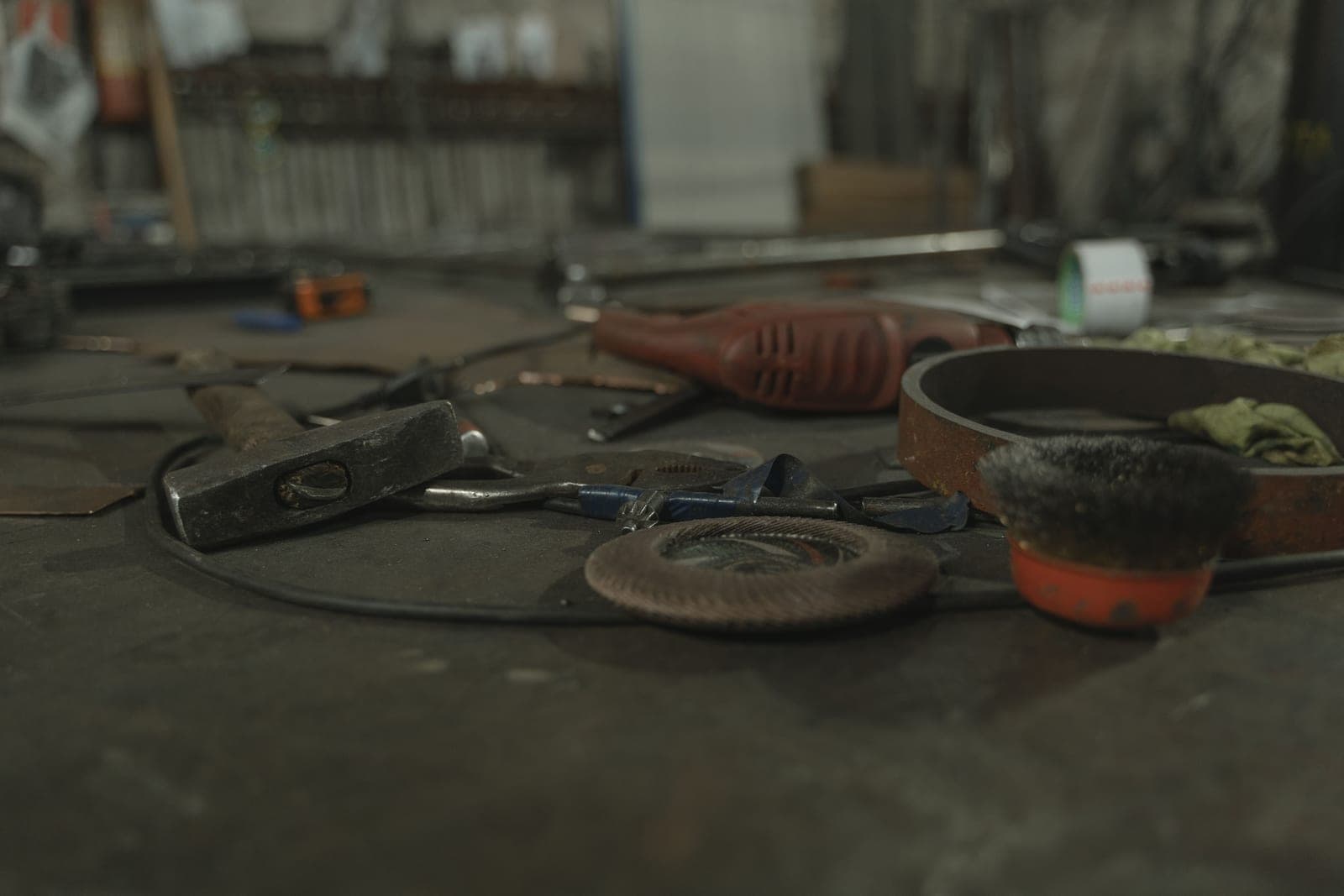
What a chuck box is
A chuck box camp kitchen is, in Wikipedia's phrase, “a device used by campers for storing the many items associated with a camp kitchen.” It goes by other names: patrol box in Scouting, grub box, camp box. Inside are the pots, pans, plates, utensils and cleaning gear, arranged in compartments, shelves, drawers and racks. It usually opens with a fold-down front, and on some designs that front becomes a work surface.
The point of it is one line in the same article: the “primary advantage” is that “it is easier to go camping quickly, because these numerous kitchen items are always packed and ready.” A chuck box is less a piece of furniture than a habit. You restock it after a trip, close the lid, and the next trip starts with the kitchen already done.
From the chuck wagon to the Scout patrol box
Historians credit Texas cattleman Charles Goodnight with the chuck wagon in 1866. The Buffalo Bill Center of the West says he bought an old Army surplus Studebaker wagon and outfitted it with compartments and shelves for food, tools, firewood, water and cookware. The American Chuck Wagon Association describes the key addition as a wooden chuck box, or cupboard, at the back of the wagon, where the cook could stow cast-iron cookware and enough provisions to feed a cattle-driving crew. Wikipedia's account adds the design detail: drawers and shelves for storage and a hinged lid that provided a flat working surface. Today's chuck boxes usually keep that idea as a fold-down front. Texas made the chuck wagon its state vehicle in 2005.
The name stuck because “chuck” and “grub” were cowboy words for food. The box itself spread through Scouting, where troops keep one per patrol and building one is often a service project that teaches carpentry.
What a DIY chuck box looks like
Scout Life's build, by David Brooks, is a good picture of the classic box. The small version uses one standard sheet of 9/16-inch plywood. The front panel folds down on a piano hinge to become the work surface, and the plan says that swing-down surface should average 30 to 34 inches high. Legs cut from 1 x 3 oak bolt on with carriage bolts and wing nuts and store flat, and sturdy plastic wash tubs serve as the drawers.
The trade-off is weight. Troop 42 built aluminum patrol boxes and says an empty one “weighs in at just over 40 lbs,” which it puts at “half the weight of one with plywood.” Theirs measures roughly 20 x 20 x 36 inches, holds a 5 lb LP tank and a camp stove, and has two side doors that double as work surfaces, one for cooking and one for food prep. That is a well-thought-out kitchen, and at just over 40 lb empty it is a heavy lift before you add a single pot.
What goes in a chuck box
The contents follow the four zones of any camp kitchen (our camp kitchen setup guide covers the layout). A working list:
- Cook: pots and pans, spatula, tongs, a knife, a cutting board, a lighter, and a food thermometer (Clemson Cooperative Extension lists 165°F for poultry and 160°F for ground meat).
- Eat: plates, bowls, cups and utensils for the whole group, plus a couple of spares.
- Clean: three collapsible bins for the Park Service's wash, rinse and sanitize method (the final rinse is 2 teaspoons of bleach per gallon), a small bottle of biodegradable soap, sponges, towels and trash bags.
- Pantry: shelf-stable staples only, such as oil, salt, spices and coffee.
Two things stay out. Perishables live in the cooler: Clemson says chilled food should be held at 40°F or below and shouldn't sit unrefrigerated for more than two hours, or one hour above 90°F. And fuel follows its own label: the National Park Service tells campers to follow the manufacturer's instructions for handling and storing propane cylinders and never to refill single-use DOT-39 cylinders. When it's time to cook, the stove runs outside; the CDC says never to use a portable gas camp stove indoors. For the dishwater, the U.S. Fish & Wildlife Service's Leave No Trace guidance is to carry it 200 feet from streams or lakes and scatter it strained.
Chuck box vs folding camp kitchen
| DIY chuck box | Folding camp kitchen | |
|---|---|---|
| Storage between trips | Rigid drawers and shelves; the kitchen stays packed | Varies: four zippered compartments (Camp Chef Sherpa), six zippered shelves (Kamp-Rite Kwik Pantry), open racks (GCI) |
| Work surface | Fold-down front at 30 to 34 in (Scout Life plan) | 29 in (Sherpa), 32.3 in (GCI Master), 33 in (Kwik Pantry) |
| Heat rating | None, unless you build one in | GCI and Kamp-Rite rate their aluminum tops for stoves; Camp Chef publishes none for the Sherpa |
| Weight | Just over 40 lb empty in aluminum; about twice that in plywood (Troop 42) | 13 lb (Sherpa) to 22.4 lb (GCI Master) |
| Warranty and parts | No warranty; every part is hardware-store stock | 1 year (Camp Chef, Kamp-Rite) to 3 years (GCI); no parts listed for any of these models |
When a folding camp kitchen replaces a chuck box
When one person carries it. The Camp Chef Sherpa weighs 13 lb and the Kamp-Rite Kwik Pantry 22 lb. An aluminum patrol box starts at just over 40 lb empty.
When the stove needs a proper surface. GCI says its cook stations' aluminum tops are for stoves, griddles and hot cookware, and Kamp-Rite gives the Kwik Pantry a roll-out aluminum cook table with a detachable windshield. A plywood lid has no such rating.
When the vehicle is small. The GCI Slim-Fold folds to 3.7 inches thick, the Kwik Pantry to 38 x 23 x 5 inches, and the Sherpa to 18.5 x 27.5 x 17 inches. A 20 x 20 x 36-inch box takes a trunk to itself.
When a chuck box still wins. A group that camps often with the same gear, a base camp where the kitchen barely moves, or anyone who wants a kitchen they can keep fixing with a screwdriver. You can also split the difference: a box or tote for storage, and a heat-rated cook station for the stove. The stations are ranked in our best camp kitchen tables.
What to look for in a chuck box or its replacement
- Storage that closes. Zippered compartments or drawers keep the kit packed and clean between trips, which is the whole point.
- A work surface at a height you can use. Scout Life's 30 to 34 inches is a sound start; our camping table height guide matches it to your elbows.
- A heat rating in writing if the stove will sit on it.
- A loaded weight you can lift, or wheels and a second person.
- Warranty and parts. Be clear-eyed here: both chuck-box-style organizers in our registry carry a 1-year warranty and list no replacement parts, so they score 5.1 and 5.0 on our Built-to-Last scale. A plywood box you build and repair yourself is the more durable object; the folding versions win on weight and convenience.
Two chuck-box alternatives
Our picks for this
Two folding kitchens built around storage
The two camp kitchens in our registry that pack a pantry or organizer into the unit, the way a chuck box does.
- Stock photo
Best camp kitchen organizer
Camp Chef Sherpa Table & Organizer
1-yr warranty5.1/10The closest thing to a soft-sided chuck box: four zippered compartments (one lined for use as a sink or cooler) under a 66 lb aluminum roll-top at 29 inches, 13 lb. No stove rating; 1-year warranty.
Check price on Amazon#ad · Price set by Amazon · Disclosure for the link to Camp Chef Sherpa Table & Organizer
- Stock photo
Best camp pantry with a stove table
Kamp-Rite Kwik Pantry with Cook Table
1-yr warranty5.0/10Pantry and stove table in one: six zippered shelves beside a roll-out aluminum cook table with a windshield, rated to 70 lb, 33 inches high, 22 lb. 1-year warranty, no listed parts.
Check price on Amazon#ad · Price set by Amazon · Disclosure for the link to Kamp-Rite Kwik Pantry with Cook Table
They score within 0.1 of each other, so choose on the job. Take the Sherpa if the stove runs somewhere else and you want the lighter organizer. Take the Kwik Pantry if you want the cook surface built in, and skip it if you need a separate prep area, since the pantry and cook table share one 35 x 22-inch footprint. If you need a stove-rated top with more prep room, the GCI cook stations lead our camp kitchen rankings; everything else we score is on the camp tables and kitchens hub.
How we scored this
Products we claim to have tested: 0
Plenty of sites say they sat in every chair on the list for a season. We don't say that, and we say so on every page. What we do instead: read the maker's rated capacity, frame, fabric, dimensions and weight; quote the warranty from the maker's own warranty page with the date we read it; check whether seat fabric, cot canvas, feet, valves and legs are sold as replacement parts; and score all of it on a published rubric where durability and warranty carry half the weight. Every spec links to where it came from.
Scores are computed from that documented research with fixed bands, not lab results. Commissions never set a score or decide a pick. The rubric and its bands are published.
Questions
Frequently asked
What is a chuck box?
A box for storing a camp kitchen, with compartments, shelves and drawers, that usually opens with a fold-down front that can serve as a work surface. It is also called a patrol box, grub box or camp box.
What goes in a chuck box?
Pots, pans, plates, utensils, cooking tools, a food thermometer, wash bins, biodegradable soap, towels, trash bags and shelf-stable staples. Perishables stay in the cooler at 40°F or below, and fuel is stored by its label.
Why is it called a chuck box?
“Chuck” and “grub” were cowboy terms for food. The box descends from the chuck box on the back of the chuck wagon, which historians credit to Texas cattleman Charles Goodnight in 1866.
How heavy is a chuck box?
Troop 42 says its aluminum patrol box weighs just over 40 lb empty, half the weight of a plywood one. The folding kitchens in our registry weigh 13 lb (Camp Chef Sherpa) to 22.4 lb (GCI Master Cook Station).
How high should a chuck box work surface be?
Scout Life's chuck box plan says the swing-down work surface should average 30 to 34 inches high. The folding kitchens in our registry put their main surfaces at 28 to 33.75 inches.
Can you cook on a chuck box lid?
Only on a surface built for heat. The Scout Life plan describes the fold-down front as a work surface, not a stove surface. GCI and Kamp-Rite rate their folding kitchens' aluminum tops for stoves.
Keep reading
Related on Seat & Stake
- Best camp kitchen tablesCook stations and camp kitchens, ranked on durability.
- How to set up a camp kitchenThe four zones a chuck box feeds.
- Camping table height guideWork-surface heights matched to your elbows.
- GCI Slim-Fold Cook Station reviewThe heat-rated station that folds to 3.7 inches.
- Best camping tablesA dining table to go with the kitchen.
- How we scoreWhy a 1-year warranty caps a kitchen's score.
Receipts
Sources
- Wikipedia — Chuck box (read 2026-09-22)
- Wikipedia — Chuckwagon (read 2026-09-22)
- American Chuck Wagon Association — Chuck Wagon History (read 2026-09-22)
- Buffalo Bill Center of the West — The Chuckwagon: An Enduring Legacy (Jane Gilvary, December 9, 2025) (read 2026-09-22)
- Washington on the Brazos Historical Foundation — Texas State Vehicle: Chuck Wagon (read 2026-09-22)
- State Symbols USA — Texas State Vehicle: Chuck Wagon (designated 2005) (read 2026-09-22)
- Scout Life — Build a Chuck Box for Camp Cooking (David Brooks) (read 2026-09-22)
- Troop 42 — Patrol Boxes (aluminum patrol box weight, dimensions and layout) (read 2026-09-22)
- Clemson Cooperative Extension, Home & Garden Information Center — HGIC 3887, Food Safety for Camping (Faith C. Isreal and Karen E. Jackson, April 14, 2022) (read 2026-09-22)
- CDC — Carbon Monoxide Poisoning Basics (read 2026-09-22)
- National Park Service — Cooking in Camp (read 2026-09-22)
- National Park Service — Propane Canister Safety for Campers (last updated July 17, 2018) (read 2026-09-22)
- U.S. Fish & Wildlife Service — Leave No Trace Principles (read 2026-09-22)
- Camp Chef — Sherpa Table & Organizer product page (read 2026-09-22)
- Camp Chef — Sherpa Camp Table and Kitchen Organizer instructions (0311-MSTAB-Instructions), PDF hosted by dealer OpticsPlanet (read 2026-09-22)
- Camp Chef — Product Warranty page, coverage chart (read 2026-09-22)
- Kamp-Rite — Kwik Pantry with Cook Table (KPT172) product page (read 2026-09-22)
- Kamp-Rite — Warranty & Returns page (read 2026-09-22)
- Kamp-Rite — Accessories & Replacement Parts listing (read 2026-09-22)
- GCI Outdoor — Slim-Fold Cook Station product page (read 2026-09-22)
- GCI Outdoor — Master Cook Station product page (read 2026-09-22)
- GCI Outdoor — Consumer Warranty Information (Tables, Chairs & Cook Stations: 3 Year Limited) (read 2026-09-22)
- GCI Outdoor — Warranty Policy hub (limited selection of replacement parts) (read 2026-09-22)
- Coleman — Pack-Away Folding Camp Kitchen product page incl. Coleman Consumer Care answers (Wayback capture 2026-09-05) (read 2026-09-22)
We don't claim to have tested, owned or sat in these products. Products we claim to have tested: 0. Specs and rated capacities come from the maker's own product pages (or a named dealer's copy when the maker's site blocked us), warranty terms from the maker's warranty page with the date we read it, and any third-party observation is attributed to whoever made it. Amazon prices change often, so we don't print them. Where a figure isn't published, we say so and it scores zero. Read the full method.