The bench is the problem, not the air
Sitting still on a metal bleacher in 40-degree weather feels far colder than walking around in the same conditions, and the reason is not the air temperature. It is conduction. Aluminum and concrete carry heat away from your body far faster than air does, and you are pressing a large area of yourself directly against them for three hours. Add the fact that you are not generating heat by moving, and a bench becomes the single biggest leak in the system.
This is exactly the same physics that makes a camping cot or sleeping pad necessary — the reason you insulate under yourself in a tent, not just over. We go through it in detail in how to stay warm on a cot, and it transfers to a bleacher bench without modification. The practical consequence is that one seat pad beats one more fleece, and it costs less.
Closed-cell foam, and why it works
Insulation under you has to survive being compressed by your own weight, which rules out anything fluffy. A down jacket tied round your waist does almost nothing once you sit on it. What works is closed-cell foam: a solid foam with sealed air cells that keeps its thickness under load.
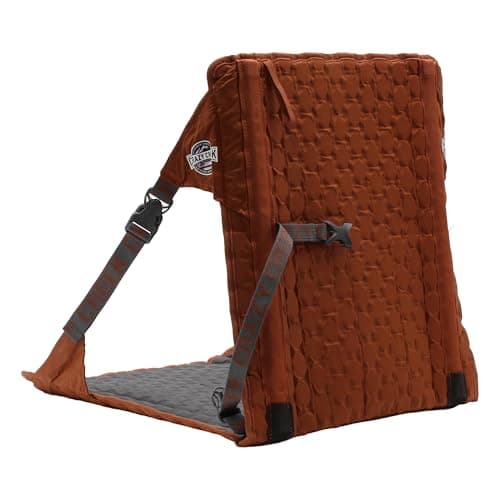
- Crazy Creek's HEX 2.0 Original publishes 8 mm of high-density closed-cell foam inside a ripstop nylon shell with a PFAS-free DWR coating, at 20 oz, rolling to a 4-inch diameter. It was designed as a backcountry seat and it is the most purpose-built answer here.
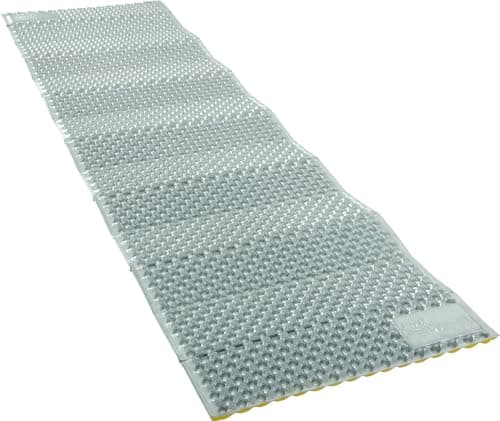
- Therm-a-Rest's Z Lite SOL is a camping pad doing a bleacher job rather well: 0.75 inches of molded closed-cell crosslinked polyethylene foam with a ThermaCapture reflective coating, published at an ASTM R-value of 2.0, weighing 14 oz and folding accordion-style to 20 x 5 x 5.5 inches. It cannot puncture and it cannot deflate. Folded in half it is a thick, reflective-backed bench pad for two people.
Or get off the bench entirely
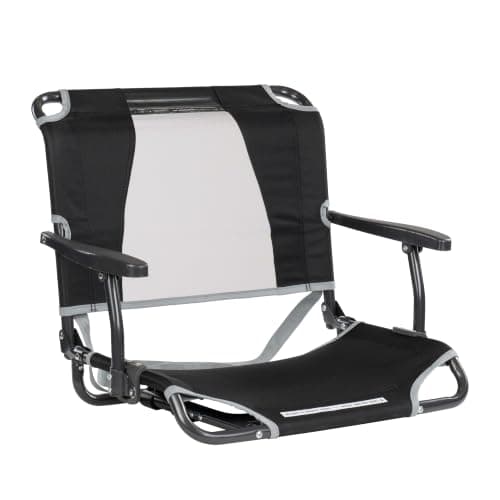
The other way to stop conduction is to stop touching the cold thing. A raised bleacher chair puts a gap of air between you and the plank, and air is a far worse conductor than aluminum. The GCI Big Comfort Stadium Chair publishes an elevated seat on a powder-coated steel frame with a rotating L-hook for open-front bleachers, rated to 330 lb at 4.84 lb — and the elevation is doing as much for warmth as the padding on a flat cushion would.
A raised seat and a foam pad are not alternatives, incidentally. On a genuinely cold night, the pad goes on the raised seat.
Layering for sitting still, which is not layering for hiking
Most layering advice assumes you are generating heat. On a sideline you are not, so the usual rules shift:
- Start dry. Anything damp — from the walk in, from warming up, from a child's spilled drink — will cost you more than it would while moving. Carry a spare pair of socks.
- Go thicker rather than more technical. Breathability matters when you are sweating. Sitting still, insulation thickness is what counts: a thick insulated parka beats three thin active layers.
- Block the wind. An exposed stand has no shelter and wind strips the warm air off your clothing. A windproof shell over insulation is worth more than another insulating layer under a permeable one.
- Keep the bottom half honest. People layer their torso and sit in jeans. Insulated or fleece-lined trousers, or long underwear, is the biggest upgrade most people have not made.
- Leave room to loosen. You will be too warm during the walk in and too cold in the fourth quarter. Layers you can open, not layers you have to take off over your head.
Feet, hands and head: where it actually gets unbearable
- Feet. On concrete or an aluminum footplate the same conduction problem applies to your soles. Thick-soled boots rather than trainers, wool socks rather than cotton, and if you can, put your feet on something — a folded pad, a bag, the bottom of your own seat cushion — instead of flat on the metal.
- Head. Not literally most of your heat loss, despite the old claim, but a disproportionate amount of discomfort. A hat that covers your ears changes how cold a night feels more than any other single item.
- Hands. You cannot keep gloves on and use a phone, so plan for it: a pocket with a hand warmer in it, or mittens you can pull off by the cuff.
- Neck. The gap between a coat collar and a hat is the wind's way in. A buff or scarf closes the whole system.
Hot drinks, hand warmers and blankets
All three help, with the right expectations. A hot drink warms you briefly and mostly works by giving your hands something to do and a reason to be happy; the calories matter more than the temperature, so take food too. Chemical hand warmers put heat exactly where the discomfort is, and they are more effective tucked against your wrists or in your boots than held loose in a pocket. A blanket is the most underrated item on this list, because a blanket across your lap stops the convection that steals heat off your legs — and tucked under you, it adds a little insulation against the bench as well, though far less than foam does.
One rule about alcohol: it makes you feel warmer by sending blood to the skin, which is literally the opposite of what you want on a cold bench. Coffee and food are the better call.
If you can bring a chair rather than sit on the bench
A field-side chair solves the conduction problem outright — your weight is on fabric suspended in air — and the padding becomes a straightforward bonus. Two things to look for in cold weather specifically:
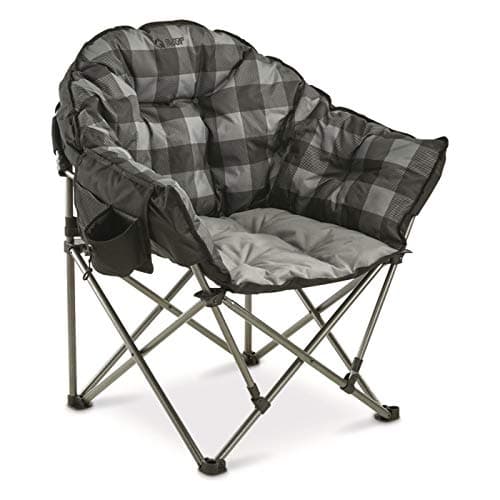
- Padded, not mesh. A mesh back is the right choice in August and the wrong one in November. The Guide Gear Oversized Club publishes extra padding on the back and sides in 600-denier polyurethane-coated polyester, which is both insulation and a wind block.
- An insulated seat cover, if your chair takes one. ALPS sells an insulated seat cover sized to the King Kong — 42.5 x 22 inches of 600D and fleece over insulated padding — which is the closest thing to a purpose-made cold-weather camp chair accessory any maker in our registry sells.
The chairs themselves are ranked in best sideline chairs, and the shade-and-heat version of this problem is in how to stay cool on the sideline.
Kids on a cold sideline
Children lose heat faster than adults and complain about it later than you would expect, usually once they are properly cold rather than when they start getting cold. Three things that work: put them on the pad rather than giving them the blanket, because they will sit on the bench no matter what you say; bring a change of socks, which solves more sideline misery than anything else you can carry; and give them something hot and something sweet at halftime rather than at the end.
A kid's own small camp chair is also genuinely better than a share of yours, for the same conduction reason — the options are in best kids camping chairs.
What to actually buy
Our picks for this
Four things that address the cold rather than the symptoms
Two closed-cell foam options, a seat that lifts you off the bench, and a padded chair for the games where you are allowed one.
Best for a lifetime warranty on the bleachers
Crazy Creek HEX 2.0 Original Chair
Lifetime warranty7.0/10The purpose-built answer: 8 mm of high-density closed-cell foam in a DWR-coated ripstop nylon shell, 20 oz, rolling to a 4-inch diameter, with strap-adjusted recline and a Sit-for-Life limited lifetime warranty. Rated to 250 lb; 15 inches wide and no armrests.
$69.95Amazon#ad · Price as of October 17, 2026 · Disclosure for the link to Crazy Creek HEX 2.0 Original Chair
Best closed-cell under-layer
Therm-a-Rest Z Lite SOL Sleeping Pad (Regular)
Lifetime warranty5.6/10A camping pad that works beautifully on a bench: 0.75 inches of closed-cell foam with a ThermaCapture reflective coating at a published ASTM R-value of 2.0, 14 oz, folding accordion-style to 20 x 5 x 5.5 inches. It cannot puncture or deflate, and Therm-a-Rest covers it for life. Folded in half it seats two.
$57.39Amazon#ad · Price as of October 17, 2026 · Disclosure for the link to Therm-a-Rest Z Lite SOL Sleeping Pad (Regular)
Best stadium chair with armrests and a bleacher hook
GCI Outdoor Big Comfort Stadium Chair with Armrests
3-yr warranty5.9/10Stops the conduction by lifting you off the plank: an elevated powder-coated steel seat with molded armrests and a rotating L-hook for open-front bleachers, 330 lb rated at 4.84 lb, under GCI's 3-year limited warranty. Put a foam pad on it when it is really cold.
$55.00Amazon#ad · Price as of October 17, 2026 · Disclosure for the link to GCI Outdoor Big Comfort Stadium Chair with Armrests
Best padded heavy-duty chair
Guide Gear Oversized Club Camp Chair
Lifetime warranty6.9/10For the games where you can bring a chair: extra padding on the back and sides in 600-denier polyurethane-coated polyester - insulation and a wind block in one - rated to 500 lb on steel with a 37-inch back, under Sportsman's Guide's lifetime guarantee on Guide Gear. 13.12 lb.
$129.99Amazon#ad · Price as of October 17, 2026 · Disclosure for the link to Guide Gear Oversized Club Camp Chair
How we scored this
What goes into every pick
We read the maker's rated capacity, frame, fabric, dimensions and weight; quote the warranty from the maker's own warranty page with the date we read it; check whether seat fabric, cot canvas, feet, valves and legs are sold as replacement parts; and score all of it on a published rubric where durability and warranty carry half the weight. Every spec links to where it came from, and the live Amazon price sits in the button.
Scores are computed from that documented research with fixed bands, so two products are always measured the same way. Commissions never set a score or decide a pick. The rubric and its bands are published.
Corrections & updates
- First published from the existing product records; no product specs were changed.
Questions
Frequently asked
How do you stay warm at a football game?
Insulate under yourself first — a closed-cell foam seat pad or a raised bleacher chair — because a cold aluminum bench conducts heat away far faster than cold air does. Then layer for sitting still rather than moving: thickness over breathability, a windproof outer, insulated trousers, a hat that covers your ears and thick-soled boots.
What is the best seat cushion for a cold stadium?
One with closed-cell foam, because it keeps its thickness under your weight. Crazy Creek's HEX 2.0 publishes 8 mm of high-density closed-cell foam, and a Therm-a-Rest Z Lite SOL is 0.75 inches of closed-cell foam with a reflective coating at a published R-value of 2.0. Soft, lofty cushions compress flat and insulate far less than they look like they should.
Why do bleachers feel so cold?
Conduction. Aluminum and concrete pull heat out of your body many times faster than air, and you are pressing a large area against them while sitting still and generating very little heat. That is why one seat pad changes more than one extra sweater.
Does a stadium blanket keep you warm enough?
Across your lap, yes — it stops the convection that strips heat off your legs, and it is one of the most useful things you can bring. Underneath you, no: a blanket compresses flat and insulates far less than closed-cell foam. Use both, with the foam underneath.
How do you keep your feet warm at a football game?
Wool socks rather than cotton, thick-soled boots rather than trainers, spare socks in the bag, and get your soles off the metal or concrete if you can — on a bag, a folded pad or the lower edge of your own cushion. A hand warmer in each boot is a legitimate last resort.
Is a chair or a seat cushion better in the cold?
A chair, if the venue allows one, because your weight is on fabric suspended in air rather than against a cold plank — and a padded chair adds a wind block too. If you are confined to the bleachers, a raised hooked seat beats a flat cushion, and a closed-cell pad on top of either is the warmest combination.
Keep reading
Related on Seat & Stake
Receipts
Sources
- Crazy Creek — HEX 2.0 Original Chair product page (read 2026-09-22)
- Crazy Creek — Care & Warranties page (read 2026-09-22)
- Crazy Creek — Crazy Repair Program page (read 2026-09-22)
- Therm-a-Rest (Cascade Designs) — Z Lite SOL Sleeping Pad, Small / Regular tech specs (read 2026-09-22)
- Therm-a-Rest (Cascade Designs) — Therm-a-Rest Warranty (limited lifetime; repair-first; fee-based repairs; repair videos and kits) (read 2026-09-22)
- TETON Help Center — Understanding R-Values for your TETON Camp Pad (read 2026-09-22)
- GCI Outdoor — Big Comfort Stadium Chair with Armrests product page and specs (read 2026-09-22)
- GCI Outdoor — Consumer Warranty Information (3-year limited warranty, exclusions) (read 2026-09-22)
- Sportsman's Guide — Guide Gear Oversized Club Camp Chair, 500-lb. Capacity (read 2026-09-22)
- Sportsman's Guide — Satisfaction Guarantee (Lifetime Guarantee on Guide Gear branded merchandise) (read 2026-09-22)
- ALPS Mountaineering — Insulated Seat Cover (pairs with the King Kong; 42.5 x 22 in; 600D and fleece over insulated padding) (read 2026-09-24)
- ALPS Mountaineering — King Kong Chair product page and specifications (read 2026-09-22)
- GCI Outdoor — BleacherBack stadium seat product page and specs (read 2026-09-22)
- Fleet Farm (dealer) — Coleman Portable Stadium Seat Chair, model 2000020281, spec table (read 2026-09-22)
Specs and rated capacities come from the maker's own product pages (or a named dealer's copy when the maker's site blocked us), warranty terms from the maker's warranty page with the date we read it, and any third-party observation is attributed to whoever made it. Prices come live from Amazon with the date they were read. Where a figure isn't published, we say so and it scores zero. Read the full method.